






Introduction
Understanding OCR A Level Grade Boundaries is essential for every student preparing for or reviewing their A Level results. Grade boundaries are more than just numbers on a results sheet—they determine the minimum marks needed to achieve each grade and ensure fairness across different exam sessions. Because exam papers vary in difficulty from one year to another, OCR uses grade boundaries to maintain consistent academic standards. This means that students who demonstrate the same level of knowledge should receive the same grade, regardless of when they took the examination.
Whether you are waiting for results day, planning your revision strategy, or comparing previous examination series, learning how grade boundaries work can help you make informed decisions. This guide explains the purpose of OCR grade boundaries, how they are set, how to interpret the official PDF, and why they may change each year. It also provides practical advice that students, parents, and teachers can use to better understand the grading process and avoid common misunderstandings.
What Are OCR A Level Grade Boundaries?
OCR A Level Grade Boundaries are the minimum number of raw marks required to achieve a specific grade in an OCR A Level qualification. Rather than assigning grades based on fixed percentages, OCR reviews examination performance after marking has been completed and determines the mark required for each grade. This approach ensures that students are assessed fairly even when examination papers differ slightly in difficulty between years.
Many students mistakenly believe that an A grade always requires the same percentage of marks every year. In reality, this is not how the system works. If an examination paper proves to be more challenging than expected, the grade boundary may be lower. Similarly, if a paper is comparatively easier, the boundary may be higher. This flexible approach protects the value of qualifications while ensuring that grades accurately reflect student performance rather than the difficulty of a particular paper.
How OCR Sets Grade Boundaries
Setting grade boundaries is a detailed process involving experienced examiners, assessment specialists, and statistical analysis. Once all examination papers have been marked, OCR reviews student performance alongside historical data from previous years. Senior examiners also compare scripts from the current examination with those from earlier sessions to ensure that the same level of achievement receives the same grade over time.
This process is designed to maintain confidence in OCR qualifications across schools, colleges, universities, and employers. The objective is not to make examinations easier or harder but to keep grading standards consistent. Every decision is based on evidence collected during the marking process, ensuring that published grade boundaries accurately reflect the overall performance of candidates in each examination series.
OCR A Level Grade Boundaries 2026
The latest OCR A Level Grade Boundaries for 2026 will be released after the examination papers have been marked and the awarding process has been completed. The published documents will include qualification-level boundaries, showing the total marks needed for each final grade, as well as component-level information for individual papers. Students should always refer to the official release rather than relying on unofficial estimates circulating online.
Each examination series is unique, so grade boundaries should never be assumed before OCR publishes them. While previous years can provide a useful guide, they cannot predict the exact marks needed in the current year. Factors such as paper difficulty and candidate performance influence the final thresholds, making official documents the only reliable source of information.
Understanding the Official Grade Boundaries PDF
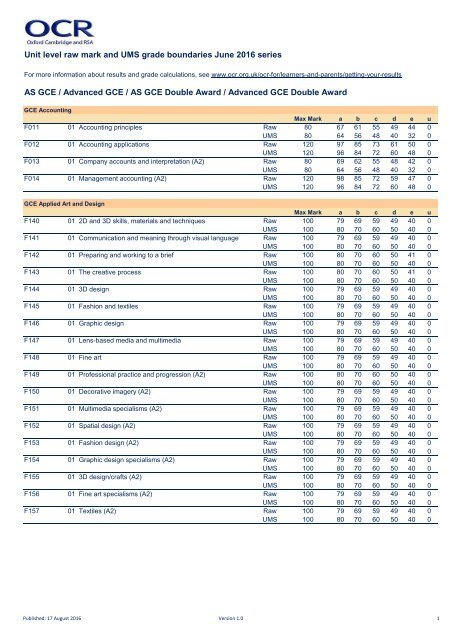
After every examination series, OCR publishes an official PDF containing detailed grade boundary information. This document is designed to help students, teachers, and schools understand the marks required for each qualification and examination component. It includes qualification codes, maximum marks, and grade thresholds, making it an important reference when interpreting results.
Students should read the document carefully to ensure they are viewing the correct qualification and examination series. OCR offers multiple specifications across different subjects, and selecting the wrong code may lead to confusion. Taking a few extra minutes to verify the subject name and specification code helps avoid misunderstandings and ensures that the information being used is accurate.
Subject-Specific Grade Boundaries
Every OCR A Level subject has its own grade boundaries because assessment methods differ across qualifications. Subjects such as Biology, Chemistry, Physics, Mathematics, Computer Science, History, Geography, Psychology, Economics, and English Literature all have unique examination structures, total marks, and assessment objectives. Consequently, the number of marks required for an A or A* grade is different for each subject.
Students should avoid comparing grade boundaries between different subjects because such comparisons are rarely meaningful. A qualification with more available marks naturally requires different thresholds than one with fewer marks. Instead, candidates should focus on understanding the grade boundaries for their own subjects and use those figures to evaluate performance and set realistic academic goals.
Why Grade Boundaries Change Every Year
One of the most common questions students ask is why grade boundaries are different each year. The answer is simple: no two examination papers are exactly the same. Although OCR carefully designs assessments to follow the same specification and maintain consistent standards, slight variations in difficulty are unavoidable. Grade boundaries are adjusted after marking so that students are rewarded fairly for demonstrating the same level of knowledge and skills, regardless of the examination series they sat.
Another important factor is overall student performance. OCR reviews statistical evidence alongside expert examiner judgement before confirming the final grade thresholds. This balanced approach ensures that grades remain reliable and comparable over time. Rather than aiming for a fixed percentage, students should focus on understanding the subject content thoroughly, as strong preparation remains the best way to achieve excellent results regardless of where the final boundaries are set.
Raw Marks and Grade Boundaries Explained
Raw marks are the actual marks awarded by examiners based on a student’s answers in the examination. Once marking has been completed, these marks are compared against the official grade boundaries to determine the final grade. For example, if a student scores above the published boundary for an A grade, they will receive that grade regardless of what percentage the raw mark represents.
Many students mistakenly assume that scoring 80% always guarantees an A grade. In reality, grade boundaries are not fixed percentages and vary between subjects and examination sessions. Understanding this distinction helps students interpret their results more accurately and prevents confusion when comparing scores with classmates or candidates from previous years.
Comparing the Latest Grade Boundaries with Previous Years
Looking at historical OCR A Level Grade Boundaries can provide useful context, especially for students preparing for future examinations. Comparing recent examination series allows teachers and students to identify long-term trends and understand how grading has evolved over time. However, historical figures should only be used as guidance because each year’s examinations are assessed independently.
Recent years have shown that grade boundaries can rise or fall slightly depending on examination difficulty and candidate performance. Despite these small adjustments, OCR’s overall goal remains the same: maintaining consistent academic standards. Students should therefore avoid relying too heavily on previous boundaries when predicting future grades and instead concentrate on achieving the highest marks possible.
Using Grade Boundaries to Improve Revision
Grade boundaries are valuable revision tools because they help students set realistic academic targets. By reviewing previous years’ thresholds alongside mock examination results, candidates can estimate how close they are to achieving their desired grades. This approach makes revision more focused and allows students to identify weaker topics before the final examination.
Teachers also use grade boundaries to plan lessons and monitor student progress throughout the academic year. Instead of simply aiming to pass an exam, students can develop personalised revision strategies based on target marks. Combining this information with examiner reports, past papers, and mark schemes provides a more complete picture of the skills needed for success in OCR A Level examinations.
Common Mistakes Students Should Avoid
One of the biggest mistakes students make is relying on unofficial websites or social media posts before OCR releases its verified grade boundaries. While many online sources attempt to predict results, only the official documents published after the awarding process contain accurate information. Waiting for the confirmed release helps students avoid unnecessary stress and misinformation.
Another common misunderstanding involves confusing qualification-level grade boundaries with individual paper boundaries. Qualification boundaries determine the overall grade, while component boundaries relate to specific examination papers. Reading the correct section of the official document is essential for understanding how final grades have been awarded and avoiding incorrect conclusions about examination performance.
OCR Compared with Other Exam Boards
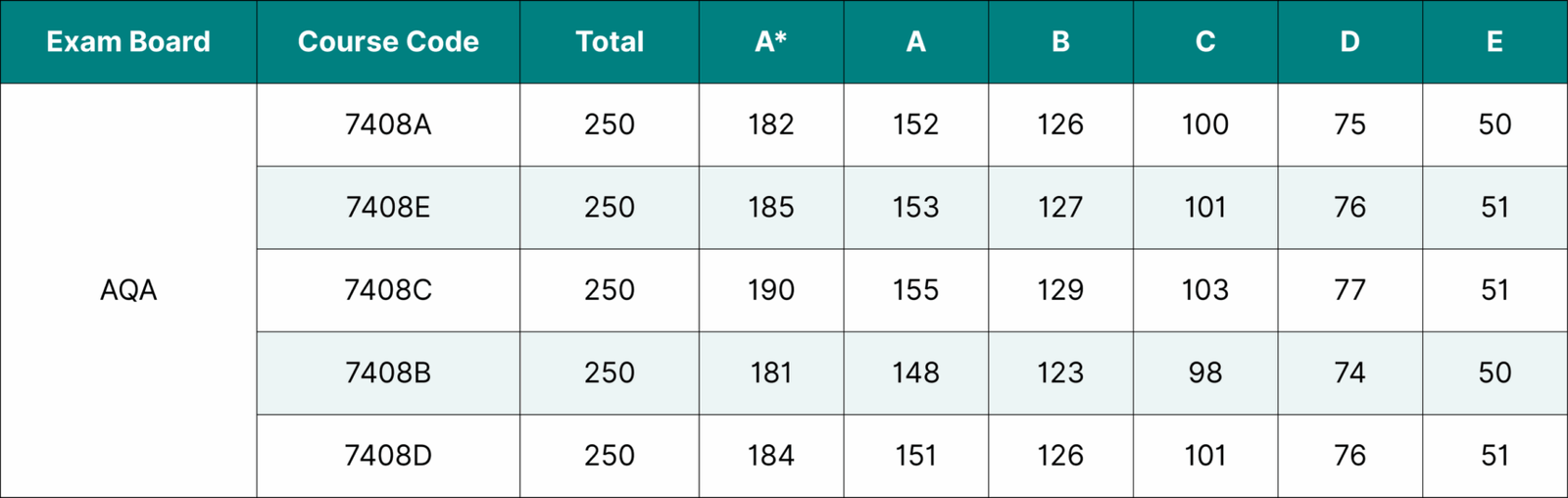
OCR is one of the leading examination boards in England, alongside AQA, Pearson Edexcel, WJEC, and Eduqas. Although all boards follow national assessment standards, each organisation develops its own examination papers, marking schemes, and grade boundaries. As a result, students should not compare OCR grade thresholds directly with those published by other exam boards.
Universities and employers recognise qualifications from all major UK examination boards equally, so students should focus on performing well within their chosen specification rather than comparing grading systems. Understanding the structure and expectations of OCR examinations is far more beneficial than attempting to judge difficulty based on another board’s published boundaries.
Results Day Tips for Students
Results day is an important milestone, and understanding grade boundaries beforehand can make the experience less stressful. Before checking your results, remember that your final grade depends on the official thresholds published for your examination series rather than estimated percentages or rumours shared online. Taking time to review the official information will help you interpret your results with confidence.
If your grades are not what you expected, speak with your teachers or college advisers before making any decisions. They can explain your marks, discuss the possibility of a review of marking where appropriate, and help you understand your next options. Whether your goal is university, an apprenticeship, or employment, professional guidance ensures that you make informed choices about your future.
Conclusion
Understanding OCR A Level Grade Boundaries gives students a clearer picture of how examination results are awarded and why grades can vary between different examination series. Rather than relying on fixed percentages, OCR uses carefully reviewed grade thresholds to ensure fairness and maintain consistent academic standards. This system helps protect the value of A Level qualifications while recognising student achievement accurately.
As each new examination series is completed, OCR publishes updated grade boundaries reflecting the latest assessments. Students should always use the official documents, compare historical information carefully, and focus on improving their knowledge rather than trying to predict exact grade thresholds. With thorough preparation, consistent revision, and a clear understanding of the grading process, candidates can approach results day with greater confidence and realistic expectations.
Frequently Asked Questions
What are OCR A Level Grade Boundaries?
OCR A Level Grade Boundaries are the minimum raw marks required to achieve each grade in an OCR A Level qualification. They are set after examinations have been marked to ensure fair and consistent grading across different examination sessions.
Do OCR A Level Grade Boundaries change every year?
Yes. Grade boundaries are reviewed and updated after each examination series because paper difficulty and overall student performance vary from year to year. This ensures that grading standards remain consistent over time.
Where can I find the official OCR grade boundaries?
The official grade boundaries are published by OCR after each examination series. Students should always refer to the official documents released on results day rather than relying on unofficial predictions or third-party estimates.
Are grade boundaries the same for every subject?
No. Every subject has its own assessment structure, maximum marks, and examination papers, so each qualification has separate grade boundaries based on the specific assessment requirements.
Can I use previous years’ grade boundaries to predict my results?
Previous grade boundaries can provide a useful reference, but they cannot accurately predict future results. The official boundaries for each examination series are determined only after marking has been completed.
What is the difference between raw marks and grade boundaries?
Raw marks are the marks awarded by examiners for a student’s answers, while grade boundaries are the minimum raw marks required to achieve each grade after the awarding process has been completed.
Why shouldn’t I compare OCR grade boundaries with other exam boards?
Different examination boards use different papers, assessment methods, and marking schemes. As a result, grade boundaries cannot be compared directly between OCR and boards such as AQA or Pearson Edexcel.
How can grade boundaries help with revision?
Reviewing previous grade boundaries alongside mock examination results helps students set realistic targets, measure their progress, and identify areas that require additional study before sitting their final examinations.
You may also read : What Is a Full Face Snorkel Mask?