






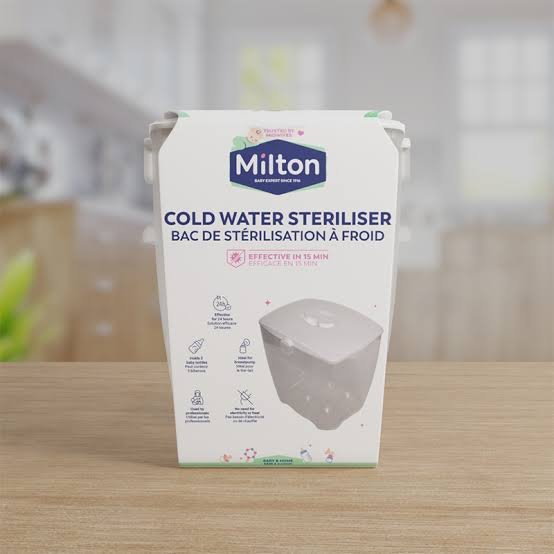
What Is a Milton Cold Water Steriliser?
A Milton cold water steriliser is a practical solution for parents who want to sterilise baby bottles, feeding accessories, dummies, and other suitable equipment without relying on heat or electricity. Instead of using steam or boiling water, the system uses a specially prepared sterilising solution. This makes it particularly useful for everyday bottle preparation, especially for families looking for a simple method that can also work when access to electrical appliances is limited.
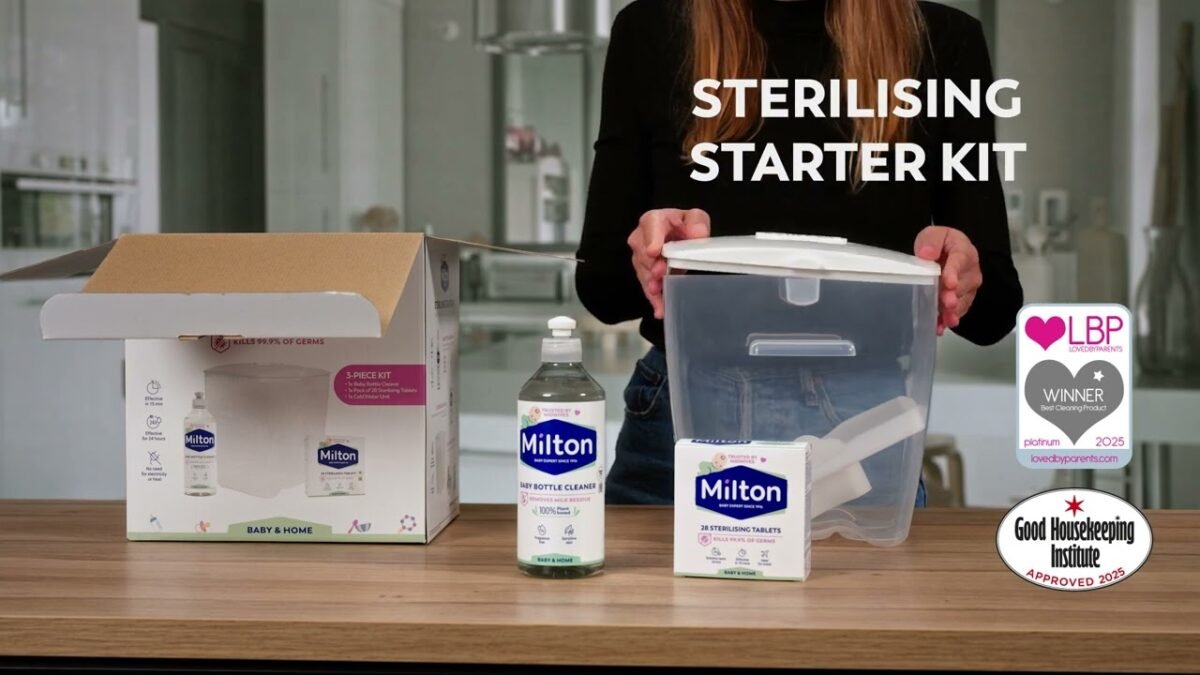
The system normally consists of a sterilising container, a lid and a submerger or weighted component designed to keep feeding equipment completely beneath the solution. Its straightforward design means several compatible items can be treated together. Capacity and included accessories can vary by product, so parents should check the packaging and current manufacturer instructions before use rather than relying on information from older product listings or general advice.
How Cold Water Sterilisation Works
Cold-water sterilisation relies on a correctly prepared chemical solution rather than heat. Clean feeding equipment is placed into the solution and kept fully submerged for the required contact period. This approach differs from steam sterilisation, which uses high-temperature steam, and microwave sterilisation, which uses heat generated inside a microwave-safe container. The cold-water method is therefore particularly useful for parents who want an alternative that does not require a heating appliance.
Correct preparation is central to the process. The sterilising product must be used with the appropriate amount of water and according to its current instructions. Every relevant part of the equipment should remain beneath the solution for the specified time. Using too little or too much product, leaving components partially exposed, or shortening the recommended contact period can affect whether the process is carried out as intended.
Milton Cold Water Steriliser Instructions
Before using the steriliser, bottles and feeding accessories should be thoroughly cleaned to remove milk residue and other visible contamination. Components should generally be separated so that cleaning water and sterilising solution can reach the relevant surfaces. Once the items have been cleaned, prepare the sterilising solution exactly as directed by the product manufacturer. Avoid estimating measurements, particularly when using concentrated sterilising fluid.
Place the clean equipment into the prepared solution and ensure every part is completely submerged. The supplied submerger can help keep floating items beneath the surface where applicable. Follow the specified contact time and avoid removing equipment prematurely. Once sterilisation is complete, handle the items hygienically and avoid unnecessary contact with surfaces that could contaminate them again. The latest product instructions should always take priority over older guides or online advice.
How Long Does the Sterilising Process Take?
Milton’s cold-water method is commonly promoted as providing sterilisation in as little as 15 minutes when the product is prepared and used correctly. This makes it an attractive option for parents who need a relatively quick routine without waiting for an electrical steam cycle. However, the exact directions should always be checked against the specific product being used because instructions, formulations and recommended timings can change.
The sterilisation period is only one part of the complete routine. Feeding equipment needs to be cleaned first, the correct solution needs to be prepared, and all items must remain properly immersed. After treatment, equipment also needs to be handled carefully. Looking only at the stated sterilisation time can therefore give an incomplete picture of how the method fits into a family’s daily bottle-feeding schedule.
What Can You Sterilise?
Suitable baby bottles, teats, dummies, soothers and other feeding accessories may be treated using a cold-water sterilising system when their manufacturers allow this method. Some breast-pump components can also be suitable, but compatibility should never be assumed. Different products may contain materials that have specific cleaning and sterilisation requirements, so the instructions supplied with the individual item should always be checked.
The steriliser should not be treated as a universal container for household items. Anything placed into the solution needs to be compatible with the sterilising method and the manufacturer’s care instructions. Parents should also remember that sterilisation does not replace thorough cleaning. Removing milk, food residue and visible dirt before sterilisation is an essential part of maintaining a hygienic feeding routine.
Capacity and Design Features
The standard Milton container is commonly described as having a capacity of around five litres and accommodating up to six standard baby bottles, although the practical capacity can vary depending on bottle size, shape and the number of additional accessories being treated. Parents using wide-neck bottles or several pump components should consider how much space they actually need rather than relying solely on the advertised bottle capacity.
The lid and submerger are useful features because they help maintain a covered and fully immersed environment during the process. A container-based system can also be easier to store than a larger electrical appliance. Before purchasing, consider available kitchen space, the number of bottles normally used each day, and whether the steriliser can comfortably accommodate the equipment used by the baby.
Benefits of Cold Water Sterilisation
One of the most appealing advantages is that the method does not depend on electricity or an electrical heating element. This gives parents more flexibility when preparing feeding equipment at home and can be particularly useful when travelling. Families who experience limited access to electrical appliances may find an electricity-free method easier to incorporate into their routine.
Another benefit is the ability to treat several compatible items together. Instead of relying on an individual treatment cycle for every bottle, parents can prepare a larger batch in one container. The system can also be useful for households that prefer a straightforward alternative to steam or microwave sterilisation. Its value ultimately depends on whether the preparation and handling routine fits comfortably into everyday life.
Drawbacks and Limitations
Cold-water sterilisation does require consistent attention to preparation and maintenance. Parents need to clean bottles before sterilisation, prepare the solution accurately and replace it according to the relevant instructions. Some families may find this more involved than using an electric steam steriliser, particularly if they prefer a system that automatically heats and completes a programmed cycle.
There is also room for mistakes if instructions are not followed carefully. Incorrect dilution, incomplete immersion, insufficient contact time or unhygienic handling can compromise the intended routine. For this reason, convenience should not be judged solely by how simple the container looks. Parents should consider the complete process, including cleaning, solution preparation, sterilisation and safe handling after treatment.
Sterilising Tablets and Sterilising Fluid
Milton sterilising tablets and sterilising fluid can provide convenient ways of preparing a cold-water sterilising solution, but they are used according to their respective product directions. Tablets offer a pre-measured format that can be convenient for storage and travel, while liquid products may appeal to parents who already have an established routine at home and prefer a measured solution.
The best format depends on individual circumstances rather than one being universally superior. Parents should consider storage, ease of measuring, frequency of use and availability when deciding which option is most practical. Regardless of the format selected, the correct dilution and instructions should always be followed. Concentrating the solution more than directed does not make the process a safer substitute for correct preparation.
Cleaning and Maintaining the Steriliser
The sterilising container itself should be kept clean because it is part of the equipment-handling process. Wash the container, lid and submerger according to the manufacturer’s care instructions, paying attention to any areas where residue could accumulate. Regular cleaning helps maintain a hygienic setup and keeps the container ready for the next sterilisation cycle.
It is important to distinguish between cleaning the steriliser and sterilising baby equipment. The container requires appropriate routine care, while bottles and accessories should be thoroughly cleaned before they enter the sterilising solution. Parents should avoid abrasive cleaning methods or unsuitable products unless the manufacturer specifically recommends them, as inappropriate cleaning can damage surfaces or components.
Safety Tips for Parents
Always follow the current instructions supplied with the sterilising product, especially regarding the amount of water, quantity of sterilising product, contact time and solution replacement. Sterilising tablets and concentrated fluids should be stored safely and kept away from children. Parents should never improvise the concentration or assume that using additional product will improve the result.
Hygienic handling is equally important after sterilisation. Avoid touching treated surfaces unnecessarily and use clean hands or suitable handling methods when removing equipment. Parents should also check the care instructions for bottles, breast pumps and other accessories because manufacturers may specify particular sterilisation methods. If product instructions conflict with general online guidance, the current manufacturer’s instructions should take priority.
Cold Water Compared With Steam Sterilisers
Cold-water and steam sterilisers take different approaches to treating feeding equipment. A steam steriliser uses heat and generally requires electricity, while a cold-water system uses a prepared chemical solution without heating. Steam can appeal to parents who prefer an automated appliance, whereas cold-water sterilisation can offer flexibility in places where electricity is unavailable or inconvenient.
There is no single method that suits every household. Parents who travel regularly or want an electricity-free option may find cold-water sterilisation particularly practical. Families with easy access to electrical appliances may prefer steam because of its automated cycle. The most important consideration is choosing a method that is compatible with the equipment and can be followed correctly and consistently.
Cold Water Compared With Microwave Sterilisers
Microwave sterilisers use heat inside a suitable microwave-safe container, making them dependent on access to a microwave and appropriate equipment. They can be convenient for parents who already have a microwave available, but the steriliser and feeding products must be used according to their individual instructions. Some items may have restrictions on microwave use, so compatibility should always be checked.
Cold-water sterilisation does not require a microwave, making it more flexible in certain situations. This can be useful during travel, outdoor stays or circumstances where electrical kitchen appliances are unavailable. However, parents still need suitable water, cleaning facilities and sterilising supplies. The better choice is therefore determined by the family’s circumstances rather than by assuming one method is universally better.
Is It Worth Using?
For parents seeking an electricity-free approach, the Milton cold water steriliser can be a practical addition to a bottle-feeding routine. Its main advantages include flexibility, straightforward operation and the ability to treat several compatible items together. The method can be particularly attractive to families who travel frequently or prefer not to depend on electrical heating appliances.
It is not necessarily the right choice for every household, however. Preparing the solution and maintaining the correct routine requires care, and some parents may find steam sterilisation more convenient. A sensible decision involves comparing the complete process, including cleaning, preparation, sterilisation, storage and ongoing costs. Choosing the method that can be used correctly and consistently is more important than selecting a system based on convenience alone.
Common Mistakes to Avoid
One of the most common mistakes is placing dirty feeding equipment directly into the sterilising solution. Sterilisation should follow thorough cleaning, not replace it. Another problem is failing to keep every relevant component fully submerged. Parents should also avoid guessing the amount of sterilising product or reducing the contact time because the solution appears ready before the recommended period has passed.
Unnecessary handling after sterilisation can also introduce contamination. Other mistakes include failing to replace the solution according to instructions, using unsuitable accessories and ignoring manufacturer-specific care guidance. Taking time to read the instructions for both the steriliser and individual feeding equipment can make the routine much more reliable and reduce avoidable errors.
Buying Guide
When choosing a cold-water steriliser, consider its capacity, dimensions and compatibility with the bottles and accessories used regularly. A larger container may be convenient for families who prepare several bottles at once, while a smaller design may work better in kitchens with limited storage. The advertised capacity should always be considered alongside the actual shape and size of the equipment.
Ongoing costs also deserve attention. The initial price of a sterilising container is only part of the overall expense because tablets or fluid may need to be purchased repeatedly. Compare the container, included accessories and replacement supplies before making a decision. Retail prices and product specifications can change, so current listings should be checked rather than relying on old prices or outdated reviews.
Using It While Travelling
The electricity-free design makes cold-water sterilisation an appealing option for families who travel. Parents do not need to depend on an electrical heating appliance, which can make the system easier to incorporate into trips where kitchen facilities are limited. A familiar routine can also be reassuring when parents are managing feeding equipment away from home.
Travel still requires careful planning. Parents need suitable water, somewhere hygienic to wash bottles and enough sterilising supplies for the journey. The steriliser should also be transported and stored in a clean manner. For frequent travellers, a smaller travel-focused sterilising product may be worth considering, provided it is suitable for the feeding equipment being used.
Overall Review and Verdict
The Milton cold water steriliser is a practical option for parents who value flexibility, simple equipment and an electricity-free sterilisation method. Its container-based design allows compatible bottles and accessories to be treated together, while the absence of heat can make it particularly convenient in situations where electrical appliances are unavailable.
Its main limitation is that the method depends on careful preparation and consistent hygiene. Parents need to clean equipment first, prepare the solution correctly, follow the required contact period and handle sterilised items appropriately. Overall, it is best considered as a flexible alternative to steam and microwave systems, with the final choice depending on the family’s equipment and daily routine.
Conclusion
Cold-water sterilisation provides parents with a straightforward alternative to heat-based bottle sterilisation. It can be particularly useful for families who want an electricity-free option that accommodates multiple compatible feeding items and can be adapted to travel. Its practical design makes it easy to understand, but successful use still depends on following the manufacturer’s instructions carefully.
The most important points are simple: clean feeding equipment thoroughly before sterilisation, prepare the solution exactly as directed, keep items completely submerged for the required period and handle them hygienically afterwards. Before using any sterilising system, check the latest product instructions for measurements, timings, compatible equipment and solution replacement guidance.
Frequently Asked Questions
How does a Milton cold water steriliser work?
The system uses a prepared sterilising solution rather than heat. Clean feeding equipment is placed into the solution and kept completely submerged for the specified contact period. The solution must be prepared according to the product’s current instructions, including the correct amount of water and sterilising product. Parents should also ensure that bottles and accessories have been thoroughly cleaned before they are placed into the steriliser.
How long does the sterilising process take?
Milton commonly promotes its cold-water method as working in as little as 15 minutes when used correctly. However, parents should check the instructions supplied with the specific product because directions can vary. The complete routine also includes washing feeding equipment, preparing the solution and handling the sterilised items hygienically, so the total time involved is longer than the stated sterilisation period alone.
Does a cold water steriliser require electricity?
No, the cold-water method does not rely on an electrical heating element. This is one of its main practical advantages because parents can use it without depending on a steam appliance or microwave. It can therefore be useful at home, during travel or in other situations where access to electrical kitchen equipment is limited, provided suitable water and sterilising supplies are available.
How many bottles can it hold?
The standard Milton container is commonly described as having around five litres of capacity and accommodating up to six standard baby bottles. Actual capacity can vary depending on bottle design, size and the number of additional accessories being sterilised. Parents should check the current product specifications and consider their own feeding equipment before deciding whether the available space is sufficient.
Do bottles need rinsing after sterilisation?
Rinsing requirements depend on the particular sterilising product and its current instructions. Parents should not automatically rinse or skip rinsing based on general advice found online. Instead, follow the directions supplied with the product being used. Using the wrong rinsing method or handling equipment unnecessarily after sterilisation could affect the hygiene of an otherwise carefully prepared feeding routine.
Can breast-pump parts be sterilised?
Some breast-pump components may be suitable for cold-water sterilisation, but compatibility varies between manufacturers and individual products. Parents should check the breast-pump manufacturer’s cleaning and sterilisation guidance before placing any component into a chemical solution. Particular attention should be given to materials, valves, membranes and other small parts that may have specific care requirements.
Is cold-water sterilisation better than steam sterilisation?
Neither approach is automatically better for every family. Cold-water sterilisation can provide flexibility without electricity or heat, while steam sterilisation may appeal to parents who prefer an automated electrical appliance. The best option depends on the family’s routine, available facilities, compatible feeding equipment and personal preferences. Most importantly, whichever method is chosen should be used correctly and consistently.
Can a cold water steriliser be used while travelling?
Yes, its electricity-free design can make it useful when travelling. Parents still need access to suitable water, cleaning facilities and enough sterilising supplies for the journey. The equipment should be kept clean and handled hygienically throughout the trip. Families who travel regularly may also want to consider a smaller travel-oriented sterilising solution that fits their feeding equipment.
How often should the sterilising solution be changed?
The solution should be replaced according to the current manufacturer’s instructions. Parents should not assume that a prepared solution can remain in use indefinitely. Following the stated replacement guidance is an important part of maintaining the intended sterilisation routine. Always check the product packaging or current instructions because recommendations may change between formulations and products.
Can bottles remain in the sterilising solution?
Some cold-water sterilising systems are designed to allow properly sterilised equipment to remain in the solution for a specified period. However, the exact conditions depend on the product instructions. Parents should check the current guidance for their particular sterilising solution rather than relying on a general time limit. Correct storage, coverage and hygienic handling remain important throughout the process.
You may also read: Met Office Isle of Wight Weather Forecast