







Introduction
The deep regrets board game takes the familiar idea of fishing and turns it into a strange, atmospheric, and increasingly dangerous tabletop adventure. Instead of simply collecting valuable fish, players head into uncertain waters where every catch can bring rewards, complications, or consequences. The game combines fishing, resource management, custom dice, push-your-luck decisions, and horror-inspired themes to create an experience that feels considerably different from conventional board games.
What makes the game especially interesting is the relationship between its theme and mechanics. Fishing is not simply a background setting for unrelated strategy systems. Players must decide how far they are willing to push an expedition, when to conserve resources, which catches are worth pursuing, and when returning to port is the sensible choice. With support for solo play and groups of up to five players, it offers several ways to experience its unusual nautical world.
What Is Deep Regrets Board Game?
The deep regrets board game is a strategic horror fishing game in which players become anglers searching the ocean for valuable catches. At first, the objective appears straightforward: go fishing, find worthwhile creatures, manage your resources, and return with something valuable. However, the deeper players go into the game’s world, the more unusual and disturbing their discoveries become.
The game was designed by Judson Cowan and published by Tettix Games. Its concept draws inspiration from nautical horror, weird fiction, and games such as Dredge, while creating its own tabletop identity. Cards, custom dice, equipment, resources, fish, and regrets all interact to create a system where players must constantly balance potential rewards against the consequences of taking greater risks.
How to Play Deep Regrets
The basic gameplay revolves around expeditions to sea. Players use their available resources and custom tackle dice to determine what they can accomplish during a round. They investigate fishing opportunities, decide which catches to pursue, and spend resources to bring creatures aboard. The important decision is that players are rarely choosing between an obviously good option and an obviously bad one.
Returning to port is equally important. Once players are safely back, they can sell catches, purchase supplies, improve their equipment, and prepare for another expedition. The temptation is always to stay at sea a little longer in search of something better. However, continuing to take risks can create problems that make an apparently successful trip considerably less profitable than expected.
Rules and the Regrets System
The rules combine fishing, equipment management, resources, catches, port actions, and regrets into one connected gameplay system. New players may initially need some time to understand how these mechanics interact, but the overall structure becomes easier once the basic expedition cycle is familiar. Most decisions revolve around managing limited opportunities while trying to improve the value of the final collection.
Regrets are particularly important because they stop the game from becoming a simple contest to collect the most expensive creatures. A player can make a profitable decision and still create a future disadvantage. This means players must think beyond immediate rewards. A strong strategy involves evaluating the entire expedition, considering future opportunities, and recognizing when an attractive catch carries too much risk.
Gameplay and Player Count
The deep regrets board game supports one to five players, giving it flexibility for different gaming groups. The publisher estimates approximately 30 minutes of play per player, although the actual duration can vary according to player count, familiarity with the rules, and decision-making speed. A smaller group can generally move through the game more quickly, while a larger group can create a longer and more social experience.
Player count can also influence how the game feels. Solo play offers an opportunity to concentrate on the game’s mechanics and atmosphere without waiting for other players. Multiplayer sessions introduce a stronger social element and allow players to experience the expedition alongside others. Community opinions about the ideal player count vary, so groups should consider whether they prefer a faster tactical session or a longer shared gaming experience.
Theme and Presentation
The atmosphere is one of the game’s most recognizable qualities. The setting begins with familiar fishing imagery but gradually introduces stranger creatures and increasingly unsettling discoveries. This contrast creates an effective sense of unease because players are performing ordinary fishing-related actions while dealing with things that clearly do not belong in a normal fishing trip.
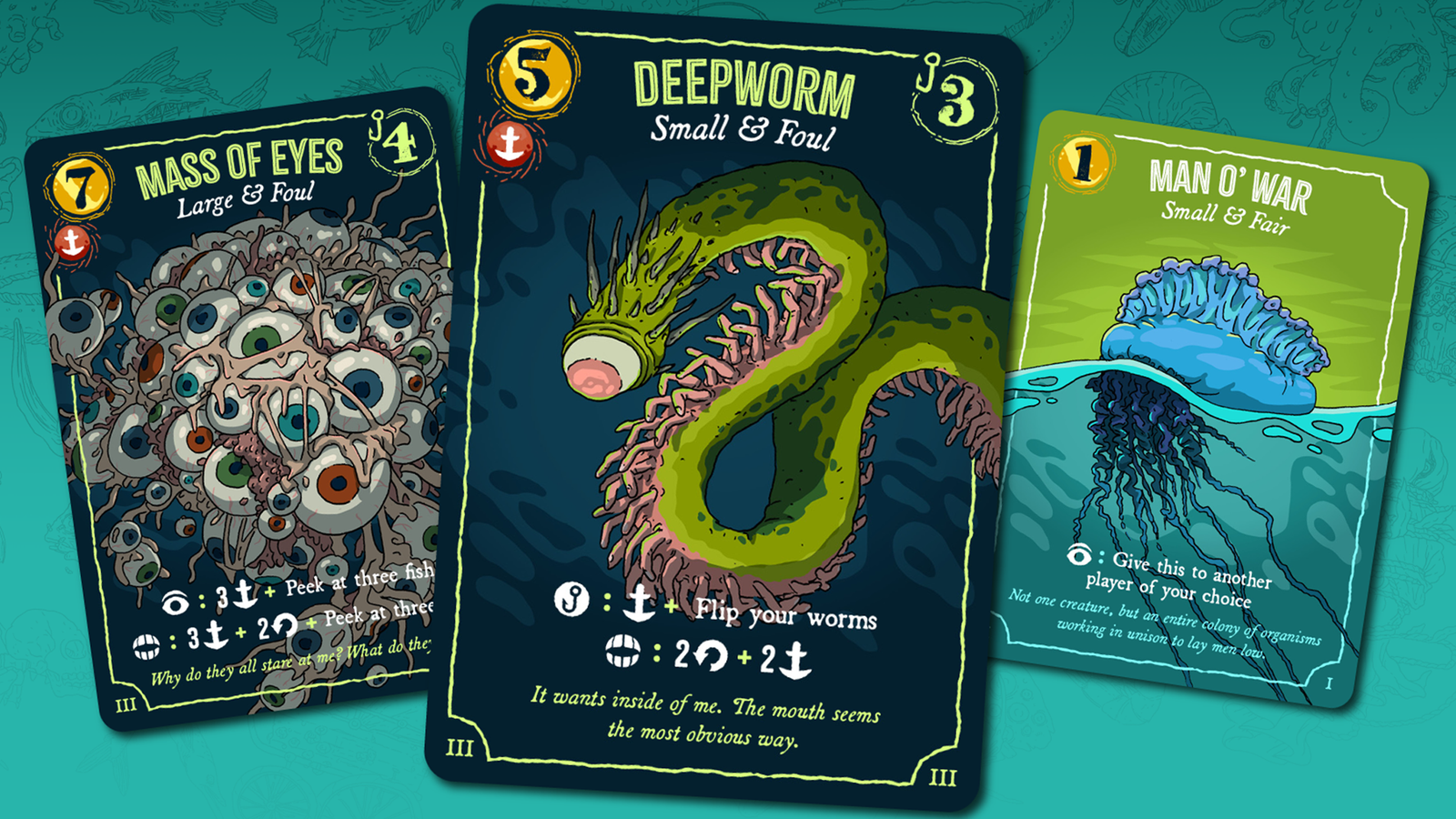
The physical presentation supports that atmosphere. Fish cards, boat pieces, trackers, dice, equipment, and other components help make the expedition feel tangible. The artwork gives the different catches their own personalities while reinforcing the game’s dark nautical identity. Players who enjoy unusual illustrations and horror-inspired themes will likely find the presentation appealing, although those looking for a completely lighthearted fishing game may find the subject matter surprisingly dark.
Strategy Tips for New Players
One of the most important lessons for new players is to avoid chasing every attractive opportunity. A valuable catch may require resources that could be more useful later, while a less spectacular option might fit better with the rest of your strategy. Instead of judging each catch independently, consider how it affects your resources, equipment, regrets, and future decisions.
Knowing when to return to port is another important skill. Remaining at sea can provide access to additional opportunities, but continuing indefinitely is rarely the safest approach. Good players learn to recognize when their current position is strong enough and when another attempt could expose them to unnecessary consequences. Flexibility is also important because dice results and available catches can force players to change their original plans.

Common Mistakes New Players Make
A common mistake is treating the game as a straightforward collection race. Although valuable catches matter, the surrounding systems mean that maximizing immediate value is not always the smartest choice. Players who ignore resources, equipment, and regrets may find that an impressive collection becomes much less useful when the final scoring conditions are considered.
Another mistake is becoming too attached to a strategy decided at the beginning of the game. The fishing opportunities and dice outcomes can change the situation quickly, so players need to adapt. If a planned approach is no longer efficient, changing direction is often better than spending additional resources trying to force the original strategy to work.
Is Deep Regrets Worth Playing?
The deep regrets board game is particularly appealing to players who enjoy unusual themes, tactical resource management, dice-based decisions, and push-your-luck mechanics. Its fishing concept immediately separates it from many horror games, while the darker discoveries give the familiar activity an unexpected twist. The game is most effective when players embrace the uncertainty rather than expecting every outcome to be completely controllable.
However, the same unpredictability may be a weakness for players who prefer deterministic strategy. Dice and unexpected discoveries are central to the experience, so randomness cannot simply be removed from the equation. The game is therefore best suited to players who enjoy adapting their plans and accepting that a carefully prepared expedition can still take an unexpected turn.
Deep Regrets and Dredge
Comparisons between Deep Regrets and Dredge are understandable because both use fishing as a foundation for unsettling discoveries. The publisher identifies Dredge as one of the inspirations behind the game’s setting, alongside other horror and dark fantasy influences. Both experiences use the ocean as more than a simple location, turning fishing into a way of discovering things that would normally remain hidden.
Despite those similarities, the two experiences are fundamentally different. Dredge is a video game centered on exploration, fishing, discovery, and direct interaction, whereas Deep Regrets is a tabletop experience built around cards, dice, resources, equipment, and risk management. Someone who enjoys the atmosphere of Dredge may appreciate the board game, but it should be approached as its own strategy experience rather than a direct tabletop adaptation.
Replayability and Learning Curve
Replayability comes from the combination of changing fishing opportunities, unpredictable dice results, equipment decisions, and player choices. Even when players know the rules, they cannot completely predict what the next expedition will provide. This uncertainty creates room for experimentation and encourages players to try different approaches rather than repeating exactly the same strategy every time.
The learning curve is manageable once the central gameplay cycle becomes familiar. Beginners need to understand several connected systems, but most of them reinforce the same core idea: make the most of an expedition without allowing risk to overwhelm the potential reward. After a first game, players generally have a much clearer understanding of how fishing, resources, equipment, and regrets influence one another.
Who Should Play Deep Regrets?
The game is a strong choice for players who enjoy horror themes, unusual concepts, resource management, dice, and risk-versus-reward decisions. It can also appeal to people who want something different from traditional fantasy or adventure board games. The combination of fishing and horror creates a distinctive premise that is easy to explain but contains enough interconnected mechanics to provide meaningful decisions.
It may not be ideal for players who strongly dislike randomness or prefer games where careful planning determines almost every outcome. The darker artwork and subject matter should also be considered when choosing an audience. The game’s recommended age and horror elements make it more appropriate for mature tabletop groups than for young children or players who prefer light, family-oriented themes.
Pros and Cons
One of the game’s biggest strengths is originality. Fishing is an unusual foundation for a horror strategy experience, and the combination of strange catches, custom dice, resources, equipment, and regrets gives the game a recognizable personality. Its theme also connects closely with its mechanics, making the setting feel meaningful rather than simply decorative.
The main drawback is that its unpredictable nature will not suit everyone. Players who prefer highly controlled strategy may find the dice and push-your-luck elements frustrating, while those expecting a simple fishing game may be surprised by the number of connected decisions. The best audience is therefore players who enjoy thematic experimentation, tactical choices, and the possibility that a promising expedition can suddenly go wrong.
Final Verdict
The deep regrets board game succeeds because it takes an ordinary activity and transforms it into something strange and memorable. Fishing becomes a calculated gamble in which players must evaluate catches, manage limited resources, consider their regrets, and decide when enough is enough. The horror theme gives those decisions additional personality without replacing the strategic elements that make the game function.
It will not appeal equally to every type of board gamer, particularly those who dislike randomness or want highly predictable outcomes. For players who enjoy unusual themes, push-your-luck gameplay, and tactical resource management, however, it provides a distinctive experience. Its combination of atmosphere, fishing mechanics, dark humor, and strategic uncertainty makes it an interesting option for groups looking beyond conventional board-game themes.
Conclusion
The deep regrets board game offers a refreshing interpretation of both fishing and horror gaming. Instead of relying only on frightening artwork or a dark story, it builds its identity around meaningful decisions. Players must consider what to catch, what to keep, how to manage resources, when to return to port, and whether taking another risk is genuinely worthwhile.
Its flexible player range, unusual premise, and interconnected mechanics give it a clear place among modern thematic board games. It is not designed to satisfy every preference, but that is also part of its appeal. For players who enjoy games with personality, uncertainty, and a strong atmosphere, Deep Regrets provides an experience that can be both strategically interesting and wonderfully unsettling.
Frequently Asked Questions
What is deep regrets board game?
The deep regrets board game is a strategic horror fishing game where players head out to sea to collect fish and other strange creatures while managing resources, equipment, risks, and regrets. The objective is not simply to collect the most valuable catches because decisions made during the expedition can affect the final outcome.
How do you play Deep Regrets?
Players use custom dice and available resources to determine what they can accomplish during their fishing expeditions. They choose fishing opportunities, attempt to catch creatures, manage their supplies, and decide when to return to port. At port, players can sell catches, purchase useful items, and prepare for another trip.
How many players can play Deep Regrets?
The game supports one to five players. The experience can change depending on the number of participants, with smaller groups generally producing quicker sessions and larger groups creating a longer social experience. The publisher estimates around 30 minutes per player, although actual playing time can vary depending on the group.
Is Deep Regrets a horror board game?
Yes. Deep Regrets is specifically designed as a strategic horror fishing game. Its horror comes from strange creatures, unsettling discoveries, and consequences associated with pushing an expedition too far. The game combines these darker elements with strategy and humor, making it different from horror games focused primarily on combat or survival.
Is Deep Regrets like Dredge?
There are clear thematic similarities because both games combine fishing with strange and unsettling discoveries. Dredge is also cited as an inspiration for Deep Regrets. However, Dredge is a video game focused on exploration and direct interaction, while the board game relies on cards, dice, resource management, and push-your-luck decisions.
Is Deep Regrets suitable for beginners?
Beginners can learn the game, although the first session may take some time because several systems interact with one another. Fishing, resources, equipment, regrets, and scoring all influence decisions. Once players understand the basic expedition cycle, the individual mechanics become considerably easier to follow.
Is Deep Regrets worth buying?
For players who enjoy horror themes, fishing concepts, resource management, dice, and risk-based decisions, the game can be a worthwhile addition to a board-game collection. Players who dislike randomness or prefer highly deterministic strategy may want to read independent reviews or try the game before purchasing.
You may also read Introduction to Lake View Garden Bar