








Understanding Toy Guns for Kids
Toy guns can be an entertaining part of imaginative and active play when children use age-appropriate products in a controlled environment. Modern options include foam dart blasters, laser tag sets, water blasters, electronic toys, and traditional role-play designs. Each type offers a different experience, so parents should consider the child’s age, interests, coordination, and intended playing environment before choosing a product.
The most suitable toy is not necessarily the largest, most powerful, or most realistic-looking option. Practical factors such as size, weight, construction, recommended age, ease of operation, and included accessories can make a much greater difference to the overall experience. Parents should also favour clearly identifiable toy designs and make sure children understand that these products are intended only for supervised, responsible play.
Types of Toy Blasters and Play Toys
Foam dart blasters remain a popular choice for children who enjoy active games and target challenges. They typically use lightweight foam projectiles and are available in straightforward manual designs as well as electronic models with additional features. Some are designed for individual target practice, while larger sets can support team games, obstacle courses, and outdoor activities with friends or family members.
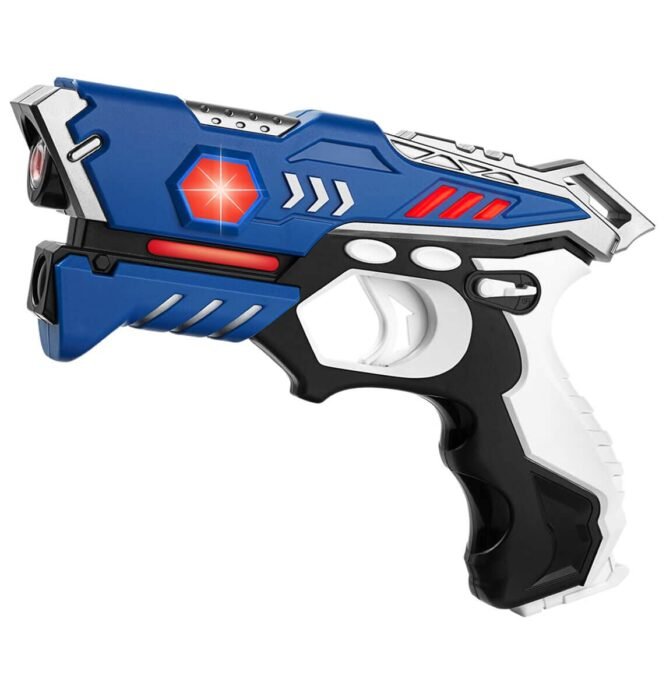
Laser tag offers a different style of play because it does not rely on physical darts. Instead, electronic sensors register hits and many sets include lights, sounds, scoring systems, or team modes. Water blasters are another popular outdoor option, particularly during warmer weather. Meanwhile, role-play toys inspired by fictional characters, cowboys, explorers, or superheroes focus more heavily on storytelling and pretend adventures.
How to Choose the Right Toy
When selecting toy guns for kids, parents should begin by checking the manufacturer’s recommended age range. Age guidance is designed to help buyers identify products that match a child’s developmental abilities, although parents should also consider the individual child’s coordination, strength, understanding, and ability to follow instructions. A toy that is appropriate for an older child may be unnecessarily complicated for a younger player.
Size and weight are equally important. Children should be able to hold and operate a toy comfortably without struggling with its controls or carrying excessive weight. Buyers should examine the loading system, trigger mechanism, accessories, batteries, and general construction before purchasing. It is also useful to think about where the toy will be used, because a large outdoor blaster may not be practical in a small indoor play area.
Safety and Responsible Play
Safety should always be considered when children use toys involving projectiles or electronic equipment. Foam darts should be designed for the relevant blaster and should be checked regularly for damage. Children should never aim at another person’s face or eyes, and projectile-based games should take place in an appropriate area with sufficient space. Younger children may also need closer adult supervision.
Parents can make play safer by establishing simple rules before a game begins. Children should know where they can play, which areas are off limits, and when the activity must stop. Toys should never be used toward roads, animals, strangers, vehicles, windows, or people who are not participating. Choosing colourful, clearly toy-like designs can also help distinguish children’s playthings from real-world objects.
Choosing Blasters for Different Ages and Play Styles
For younger children, straightforward toys with simple controls and lightweight construction can be easier to understand and handle. Parents should pay particular attention to age recommendations and any warnings concerning small components. Simple role-play toys can sometimes be more suitable than advanced blasters because they allow children to focus on storytelling and creative games without complicated mechanisms.
Older children may enjoy more interactive products, including foam blasters with additional features or multiplayer laser tag systems. These can introduce team games, targets, timed challenges, and scoring systems. However, a more advanced toy should still be suitable for the child’s abilities. Complexity should never be treated as a substitute for safety, and children should understand the rules before beginning competitive play.
Foam Blasters Versus Laser Tag
Foam blasters and laser tag sets provide different types of entertainment, so the better choice depends on the child’s preferences and the intended setting. Foam blasters involve physical projectiles and therefore require appropriate space, suitable darts, and additional precautions. They can be excellent for target practice, outdoor games, and obstacle courses where players have enough room to move safely.
Laser tag provides a projectile-free alternative that can work particularly well for multiplayer activities. Players can compete using electronic sensors, with some systems providing digital scoring, sound effects, lights, and different game modes. This can make laser tag attractive for families who want an interactive group activity without collecting foam darts after every round. Both options can encourage movement, teamwork, and imaginative competition.
Features Worth Checking Before Buying
A high-quality toy does not necessarily need to have the most features. Buyers should look at practical details such as comfortable handling, durability, simple controls, reload mechanisms, and the availability of compatible accessories. For electronic products, battery requirements and operating time are also worth considering. A product that is easy for a child to operate can often provide more enjoyment than a complicated design with features they rarely use.
Parents should carefully check what is included with the purchase. Some sets provide several blasters, targets, darts, scoring equipment, or other accessories, while individual products may require additional items. Replacement parts are another useful consideration, particularly for foam-based toys that are likely to receive frequent use. Comparing the complete package rather than simply looking at the headline price can help buyers make a more informed decision.
Indoor and Outdoor Play
The playing environment can have a major effect on which product is appropriate. Indoor spaces often contain furniture, glass, electronics, decorations, and other objects that could be damaged during projectile-based games. If a manufacturer permits indoor use, parents should establish a clear play area and remove fragile objects wherever possible. Laser tag or non-projectile role-play toys may be more convenient when available space is limited.
Outdoor areas generally provide greater freedom for active games involving foam or water. A private garden or another appropriate space can work well for target challenges, obstacle courses, and team activities. Even outdoors, children should remain within defined boundaries and avoid roads, public spaces, animals, strangers, and anyone who has not agreed to participate. Clear rules allow children to enjoy active play while reducing unnecessary risks.
Imaginative Play and Creative Activities
Toy blasters can become part of much broader imaginative games when children are encouraged to create their own stories. A role-play toy might become equipment used by an imaginary explorer, superhero, space traveller, or fictional team. Children can create characters, invent missions, design obstacles, and develop their own rules, turning a simple toy into an activity involving creativity and communication.
Parents can encourage this type of play by focusing on storytelling and teamwork rather than realistic imitation. Target games, treasure hunts, obstacle courses, and fictional missions can provide structured activities without requiring children to aim at one another. Establishing a clear distinction between pretend play and real-world behaviour is important, particularly when children are playing in environments where other people may see the toy.
Buying, Maintenance and Long-Term Value
Toy guns for kids are sold through specialist toy retailers, department stores, established online shops, and other marketplaces. When buying online, parents should read the full product description rather than relying solely on photographs or promotional titles. Important information includes the recommended age, dimensions, weight, included accessories, operating requirements, safety guidance, and manufacturer details.
Maintenance can also influence how long a toy remains useful. Parents should regularly inspect blasters for cracks, loose components, or damaged projectiles and replace unsuitable parts when necessary. Electronic products should be stored according to the manufacturer’s instructions, while water toys should be emptied and stored appropriately after use. A durable product that is easy to maintain may offer better long-term value than a cheaper item that quickly becomes unusable.
Frequently Asked Questions
Are toy guns safe for children?
The safety of a toy depends on its design, the child’s age, and how it is used. Parents should follow the manufacturer’s instructions and establish clear rules before play begins. Projectile-based products require particular care, including avoiding the face and eyes and ensuring children play in a suitable environment.
What are the safest options?
Laser tag avoids physical projectiles, while foam and water blasters provide different forms of active play with their own safety considerations. There is no single product that is automatically ideal for every child. Age suitability, supervision, design, playing space, and responsible behaviour should all be considered.
What age are these toys suitable for?
The appropriate age varies between products, so parents should always check the manufacturer’s recommendation before purchasing. They should also consider whether the child can comfortably handle the toy, understand its instructions, and follow agreed safety rules. Individual development can be just as important as the age printed on packaging.
Are foam blasters suitable indoors?
Some foam blasters may be suitable for indoor play when the manufacturer permits it and enough space is available. Parents should remove fragile objects, establish boundaries, and prevent children from aiming toward faces. Smaller homes may be better suited to target-based activities or projectile-free games such as laser tag.
Are laser tag sets better than foam blasters?
Neither option is universally better. Laser tag can be convenient for multiplayer games because it does not use physical darts, while foam blasters can offer engaging target practice and outdoor activities. The right choice depends on the child’s interests, the number of players, available space, and preferred style of play.
Conclusion
Choosing toy guns for kids should involve more than selecting an attractive product from a retailer. Parents should consider the child’s age, abilities, interests, playing environment, and the type of activity they want to encourage. Foam blasters, laser tag systems, water blasters, electronic toys, and role-play designs can all provide different forms of entertainment when selected appropriately.
The best choice combines enjoyable play with responsible use. Checking current manufacturer guidance, selecting an age-appropriate design, establishing clear boundaries, and supervising children when necessary can help create a positive experience. Whether the goal is imaginative storytelling, target practice, outdoor activity, or multiplayer competition, thoughtful product selection can make children’s play more enjoyable while keeping safety at the centre.
You may also read Why Brereton Green Is Attracting Homebuyers