







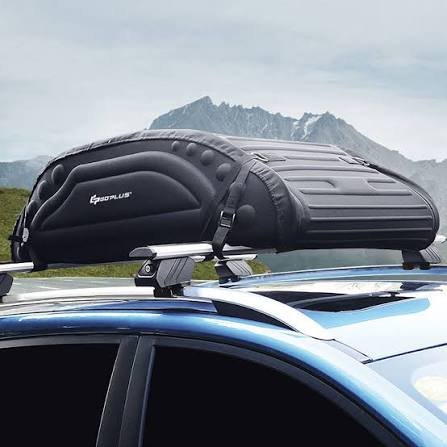
Travelling with a packed car can quickly become difficult when the boot is full and passengers need comfortable seating space. A soft roof carrier offers a practical way to increase luggage capacity without filling the cabin with bags, coats, camping equipment, or sports gear. Unlike a traditional hard-shell storage box, a flexible roof carrier can usually be folded away when it is not needed, making it particularly useful for occasional holidays and road trips.
A roof bag for car travel can be a convenient option for families, campers, and drivers who regularly find themselves short of storage space. However, choosing one should involve more than simply looking at capacity or price. Material quality, attachment systems, weather resistance, vehicle compatibility, weight limits, and safe loading all affect how useful the carrier will be. Understanding these factors makes it easier to choose a product that suits both the vehicle and the journey.
What Is a Soft Roof Bag?
A soft roof bag is a flexible luggage carrier designed to transport belongings on top of a vehicle. Most models use durable synthetic materials combined with reinforced seams, straps, buckles, attachment points, and a secure closure system. Depending on the design, the carrier may attach to existing roof bars or rails, while certain models are designed for vehicles without traditional roof bars. The exact fitting method therefore needs to be checked before purchase.
One of the biggest advantages of a soft carrier is its flexibility. When empty, it can often be folded into a relatively compact size, making storage much easier than with a rigid roof box. It can also accommodate differently shaped luggage because its fabric construction is not restricted by a fixed internal shape. This combination of flexibility, portability, and additional storage makes soft roof carriers appealing to people who only need extra capacity occasionally.
Why Use Extra Roof Storage?
The main reason to use roof storage is simple: it creates additional space. A vehicle that feels cramped when loaded with holiday luggage can become considerably more comfortable when some belongings are moved outside the passenger compartment. This can be especially helpful for families travelling long distances, where maintaining enough legroom and seating space can make the journey more pleasant.
Extra roof storage can also be useful for camping trips, sporting activities, skiing holidays, and other journeys involving bulky equipment. Rather than attempting to squeeze everything into the boot, travellers can organise luggage between the interior and roof. However, additional storage should always be used responsibly. The vehicle’s permitted roof load remains an important limitation, regardless of how much physical space the carrier provides.
Soft Roof Bag Compared With a Hard Roof Box
Soft and hard roof storage products provide additional luggage space, but their designs offer different advantages. A hard roof box has a rigid outer shell that maintains its shape and can provide strong protection for its contents. It may also offer greater security against opportunistic access. A soft carrier, on the other hand, is generally lighter and can be folded when removed, making it easier to store between journeys.
The right choice depends on how frequently the storage system will be used and what type of belongings it will carry. A regular traveller who prioritises rigidity and security may prefer a hard box, while an occasional holidaymaker may value the convenience of a soft carrier. Soft models can also be attractive where storage space at home is limited, because they do not require a large permanent area when they are not fitted to the vehicle.
How to Choose the Right Roof Bag
Capacity is an important consideration, but it should not be the only factor used when choosing a carrier. Buyers should look at the material, stitching, attachment points, strap quality, closure system, and weather protection. A carrier that offers plenty of storage but uses weak components may not provide the reliability needed for long journeys. Strong construction is particularly important because the carrier is exposed to wind, rain, road spray, and changing driving conditions.
Vehicle compatibility also deserves careful attention. Check the manufacturer’s requirements alongside the vehicle handbook before buying. The maximum roof load can include the carrier itself, roof bars or other mounting equipment, and the luggage inside. A carrier with a very large advertised capacity does not mean the vehicle can safely carry that amount. Choosing a size that matches both your luggage needs and the vehicle’s limitations is a more sensible approach.
Choosing the Right Storage Capacity
Soft roof carriers are available in a variety of capacities, allowing buyers to select a size that matches their travel requirements. A smaller carrier may be enough for a short break or a couple travelling with limited luggage, while larger models can provide additional room for family holidays and camping equipment. Capacity should always be considered in relation to the type of luggage being carried, because bulky lightweight items occupy more space than compact heavy objects.
It is equally important to understand the difference between volume and weight. A carrier might provide hundreds of litres of storage space, but that does not mean it can safely be filled with hundreds of kilograms of belongings. The vehicle manufacturer’s roof-load limit takes priority, and the combined weight of all roof-mounted equipment and luggage must remain within that limit. Packing efficiently therefore means using available space sensibly while maintaining a safe overall load.
Can a Roof Bag Be Used Without Roof Bars?
Not every soft roof carrier requires traditional roof bars. Some products are designed with straps that can be secured through suitable vehicle door openings, while other designs require roof rails, crossbars, or another compatible mounting system. Because vehicles have different roof structures and door configurations, there is no universal installation method that works for every model.
Before purchasing, carefully review the carrier’s compatibility information and compare it with the vehicle manufacturer’s guidance. Pay attention to roof rails, doors, mounting points, and maximum load requirements. If a product requires roof bars, using it without the appropriate equipment may create an insecure setup. Following the specific installation instructions is essential because correct attachment is one of the most important parts of using roof-mounted luggage safely.
How to Install a Soft Roof Carrier
Before installation, clean the vehicle roof and check the carrier for visible damage. Dirt or grit between the roof and carrier can create unnecessary rubbing during travel, while damaged straps, seams, or buckles may compromise the security of the load. Position the carrier centrally and make sure it does not interfere with doors, the boot, aerials, sunroofs, or other vehicle components.
Once positioned correctly, attach and tighten the straps according to the manufacturer’s instructions. Avoid leaving excess strap material loose where it could move around during travel. Check every fastening and closure before setting off, then inspect the setup again after driving for a short distance. A properly installed carrier should remain stable rather than shifting noticeably across the roof as the vehicle moves.
How to Pack a Roof Carrier Safely
Packing affects both the security of the luggage and the way the vehicle behaves on the road. Heavy belongings should be distributed sensibly rather than concentrated in one small area. Clothing and softer items can be used to fill available spaces, while sharp or rigid objects should be properly protected so they cannot damage the carrier’s fabric or internal surfaces.
Avoid forcing the closure when the carrier is already full. Overpacking can place unnecessary stress on zips, seams, straps, and attachment points. It is also sensible to protect moisture-sensitive belongings inside additional waterproof bags, particularly when travelling in unpredictable weather. After packing, close every fastening carefully and check that the carrier maintains its intended shape without excessive bulging.
Weather Protection and Waterproofing
Weather resistance is one of the most important features to consider when purchasing a soft roof carrier. Manufacturers use different materials, coatings, seams, and closure designs, so protection levels can vary considerably between products. A carrier described as water-resistant should not automatically be treated as completely waterproof in every condition, particularly during prolonged heavy rain or severe weather.
Travellers carrying clothing, electronics, documents, or other moisture-sensitive belongings may benefit from an additional waterproof layer inside the carrier. This provides extra protection even when the exterior performs well against rain and road spray. Buyers should examine the manufacturer’s specific weather-resistance claims rather than relying solely on general product descriptions. Properly closing the carrier and avoiding damaged seals, seams, or zips is equally important.
Safety Considerations When Driving
A roof carrier changes the vehicle’s overall weight distribution and can increase aerodynamic resistance. Additional weight may influence acceleration, braking, handling, and the vehicle’s response to strong crosswinds. Drivers should therefore remain aware that a fully loaded vehicle may behave differently from an unloaded one, particularly on motorways, exposed roads, or during difficult weather conditions.
The vehicle’s permitted roof load should never be exceeded. This figure can include roof bars, mounting equipment, the empty carrier, and its contents. Before travelling, inspect all attachment points and straps and make sure the luggage is secure. During a longer journey, periodic checks are sensible. If severe weather or strong winds develop, drivers should take appropriate precautions and reconsider whether continuing under those conditions is suitable.
Fuel Economy and Roof-Mounted Luggage
Putting luggage on the roof can increase aerodynamic drag, particularly at higher speeds. As a result, a vehicle carrying a roof-mounted carrier may use more fuel than the same vehicle without additional equipment. The actual difference varies depending on the vehicle’s shape, the size of the carrier, the amount and arrangement of luggage, driving speed, and weather conditions.
Choosing an appropriately sized carrier can help avoid unnecessary bulk. There is little benefit in using a very large carrier when only a modest amount of additional storage is required. Removing the carrier when it is no longer needed can also reduce unnecessary aerodynamic resistance. Sensible packing and steady driving can further help make journeys more efficient while carrying additional luggage.
Features Worth Looking For
A quality roof bag for car use should combine adequate storage with strong construction and dependable attachment components. Look for durable fabric, reinforced seams, strong straps, secure buckles, reliable zips, and well-designed attachment points. Weather protection should also be considered carefully, especially if the carrier will be used for long journeys where exposure to rain and road spray is unavoidable.
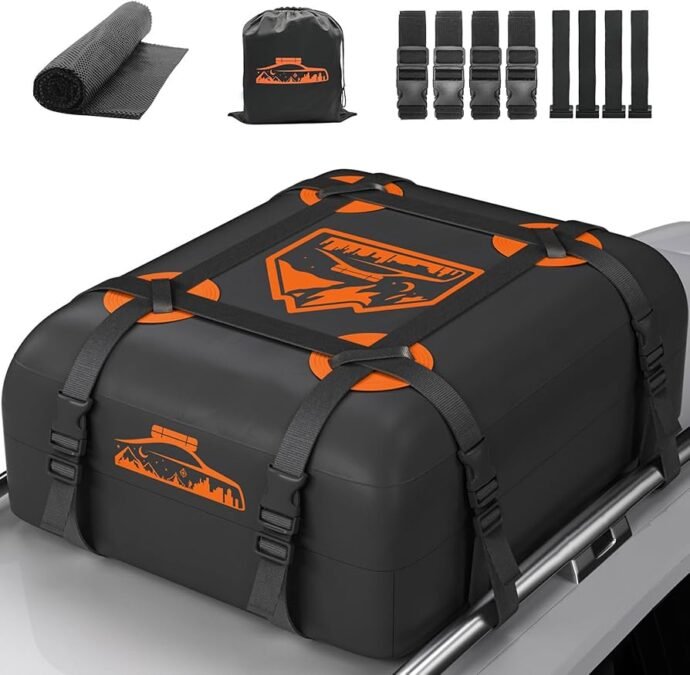
Convenience features can make the product easier to use. A foldable design is useful for storage, while an included storage bag can help keep the carrier organised between trips. Buyers should also review the manufacturer’s installation instructions, warranty information, weight limits, and compatibility guidance. These details can be more valuable than simply choosing a product based on its advertised capacity.
Common Mistakes to Avoid
One common mistake is selecting a carrier solely because it has the largest capacity. A larger carrier is not necessarily better if the vehicle cannot safely support the corresponding load. Another mistake is assuming that every soft carrier will fit every car. Attachment systems differ, and some vehicles may require specific roof equipment before a particular product can be used.
Overpacking is another avoidable problem. Excessive weight or pressure can place strain on the carrier’s fabric, seams, zips, and straps. Drivers should also avoid ignoring visible damage or failing to check the carrier before a journey. A few minutes spent inspecting the setup, tightening attachments, and confirming the load can help prevent problems later.
Cleaning and Storing Your Roof Carrier
After a trip, remove dirt, dust, and road grime using the cleaning method recommended by the manufacturer. The carrier should be allowed to dry completely before being folded and stored. Putting a damp carrier into storage for a long period can encourage unpleasant smells and may contribute to deterioration of the material.
Before storing it, inspect the fabric, seams, buckles, straps, and zips for signs of wear. Any damage should be addressed before the next journey rather than discovered immediately before departure. Store the carrier somewhere clean and dry, away from conditions that could unnecessarily expose the material to moisture or excessive heat.
Roof Bag Buying Checklist
Before buying a soft roof carrier, check whether it is compatible with your particular vehicle and attachment system. Confirm its capacity, empty weight, maximum permitted load, dimensions, construction materials, weather protection, strap design, closure system, and included accessories. These details provide a much clearer picture of whether the product will suit your intended journeys.
It is also worth checking the manufacturer’s instructions and warranty information before making a final decision. A carrier should provide a sensible balance between capacity, durability, convenience, and safe operation. Rather than choosing purely by price, consider how frequently it will be used and the type of luggage it will carry. This approach can help ensure the purchase remains useful over multiple trips.
Who Should Consider a Soft Roof Carrier?
A soft carrier can be particularly useful for families who occasionally need extra luggage space, especially during holidays and long road trips. It can also suit campers, outdoor enthusiasts, and travellers carrying bulky but relatively lightweight belongings. Its ability to fold down after use makes it appealing to people who do not have room to store a large rigid roof box.
However, a soft carrier is not necessarily the best solution for every driver. People who frequently transport valuable equipment may place greater importance on the security and rigid construction of a hard roof box. The decision should ultimately consider vehicle compatibility, luggage requirements, frequency of use, available storage space, budget, and the level of protection required.
Frequently Asked Questions
Is a roof bag suitable for motorway travel?
A soft carrier can be used for motorway journeys when it is specifically compatible with the vehicle and installed according to the manufacturer’s instructions. The vehicle’s roof-load limit must be respected, and all luggage should be securely contained. Drivers should also remain alert to wind conditions and check the carrier during longer journeys to ensure that straps and attachments remain secure.
Can I use a soft carrier without roof bars?
Some models are specifically designed for use without conventional roof bars, while others require suitable roof rails or crossbars. The answer depends on the individual product and vehicle. Always check the manufacturer’s compatibility information before purchase rather than assuming that a particular fitting method will work with your car.
Will a soft roof carrier damage my car?
Correct installation can help minimise the risk of unwanted rubbing or contact with the vehicle. Keeping the roof and carrier clean, using any supplied protective material, and following the fitting instructions are important precautions. The carrier should also be inspected regularly for dirt or damage that could affect its contact with the roof.
Are soft roof carriers waterproof?
Weather protection varies from one model to another. Some use waterproof or highly water-resistant materials, but performance can depend on seams, zips, closures, and construction quality. Sensitive belongings can be placed inside additional waterproof bags for extra protection, particularly when travelling through prolonged heavy rain.
Does roof storage increase fuel consumption?
Roof-mounted luggage can increase aerodynamic drag and may therefore increase fuel consumption. The effect depends on factors including vehicle design, carrier size, driving speed, weather, and the shape of the luggage. Removing unnecessary roof equipment when it is not being used can help reduce additional drag.
Is a soft carrier better than a hard roof box?
Neither option is universally better. Soft carriers are generally valued for their flexibility, lighter construction, and compact storage, while hard boxes can provide greater rigidity and security. The most suitable option depends on how often the storage is needed, what will be transported, and how much protection the user expects.
Conclusion
A roof bag for car travel can provide valuable additional luggage space when the vehicle’s interior is not large enough for everything required on a journey. Its flexible construction, compact storage, and practical capacity make it an attractive alternative to a permanent hard roof box for occasional travellers, families, campers, and road-trip enthusiasts.
Choosing the right product requires more than comparing advertised capacity. Vehicle compatibility, roof-load limits, attachment quality, weather protection, construction, packing technique, and regular safety checks all matter. By selecting an appropriate carrier and using it according to the manufacturer’s guidance, travellers can gain useful extra storage while keeping their luggage organised and their journey more comfortable.
You may also read What Is Deep Regrets Board Game?